
FFGR Japan · Giappone
Kyoto
Gion, geishas & Arashiyama bamboo
Il Grande Racconto
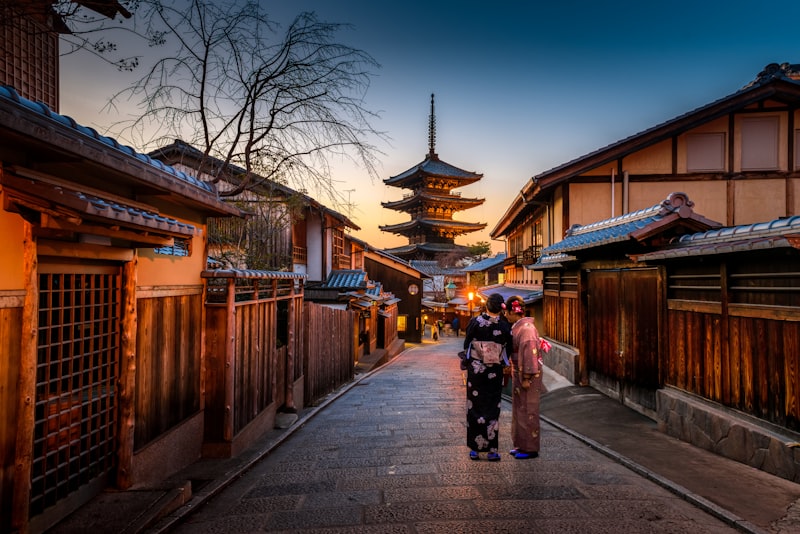
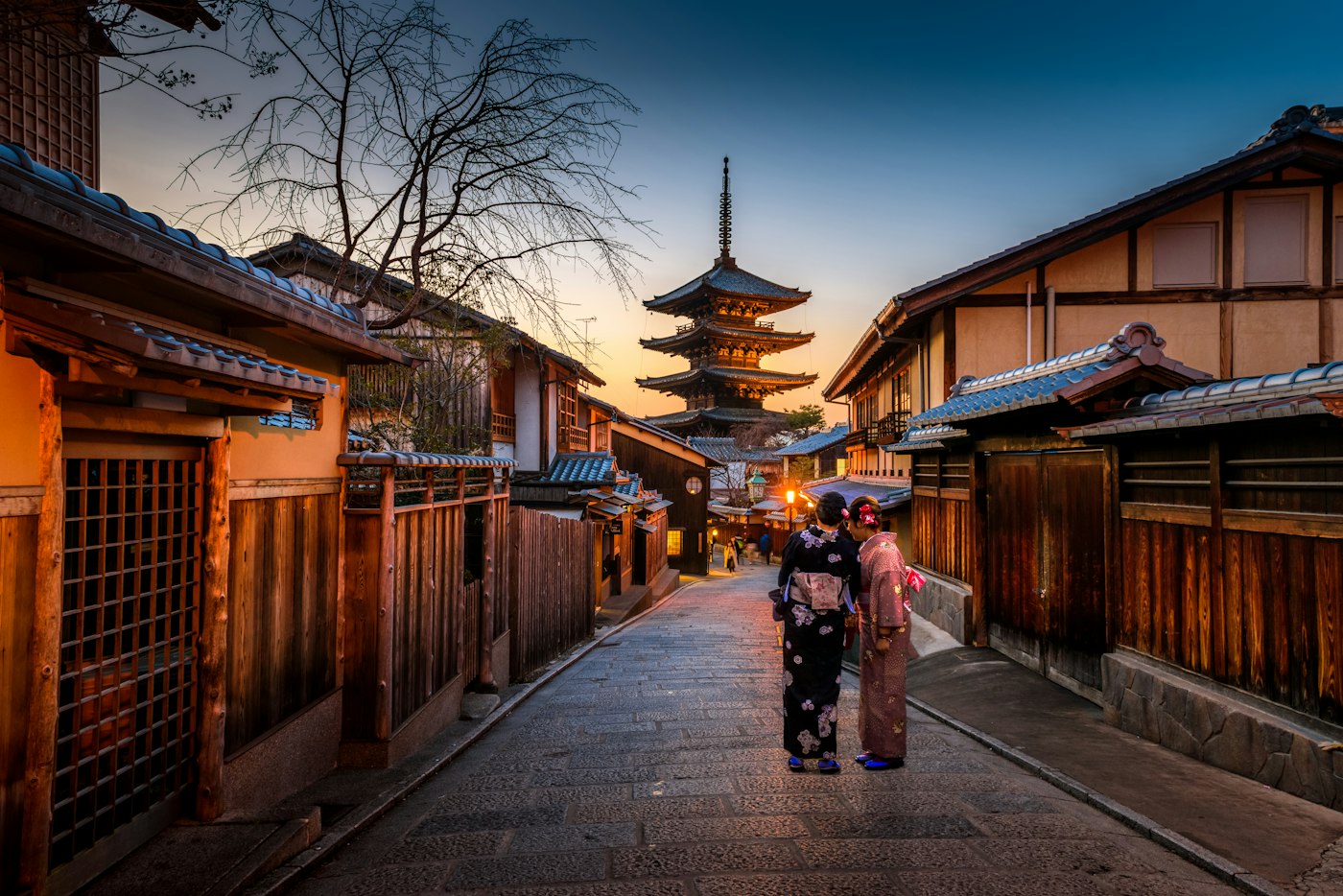
Per undici secoli Kyoto fu la sede degli imperatori, e la città non ha mai del tutto rinunciato all'abitudine della maestà. Entro la sua griglia silenziosa si trovano circa duemila templi e giardini, ciascuno custode di un diverso registro del silenzio, la ghiaia rastrellata del Ryōan-ji, il muschio del Saihō-ji, le porte vermiglie di Fushimi Inari che salgono nella foresta di cedri. Le geiko passano ancora al crepuscolo nella luce delle lanterne di Gion. I viaggiatori più raffinati del mondo vengono qui non per vedere, ma per essere rallentati: il tè versato secondo la regola, un giardino contemplato dal cuscino giusto, un acero incorniciato da una finestra costruita quattrocento anni fa precisamente a quello scopo.
Da Tokyo, l'approccio più elegante è il Nozomi Shinkansen, poco più di due ore nella quiete della Green Car, il vostro chauffeur che vi accompagna al binario della Tokyo Station mentre un secondo collega, in guanti bianchi, attende ai varchi della Kyoto Station. Chi predilige la strada percorre le autostrade Tomei e Shin-Tomei, raggiungendo la Meishin lungo la sponda meridionale del Lago Biwa: circa cinque ore senza fretta nella Lexus LM, sedili posteriori reclinati, separé sollevato, tè verde versato sopra la Baia di Suruga. Le portiere si aprono da sé; i bagagli non vengono toccati due volte. Comunque arriviate, la transizione è impeccabile, Kyoto non comincia ai confini della città, ma nell'istante in cui prendete posto.
Soggiornate al Tawaraya, il ryokan tricentenario il cui libro degli ospiti si legge come la storia del secolo, o tra i giardini boschivi dell'Aman Kyoto a Takagamine, ai piedi dello Hidari Daimonji. Cenate da Kikunoi a Higashiyama, dove il kaiseki segue il calendario settimana dopo settimana, o da Hyōtei, che nutre i viaggiatori lungo il sentiero verso il Nanzen-ji da oltre quattrocento anni. A novembre, chiedete al vostro chauffeur gli aceri del Tōfuku-ji all'ora dell'apertura; in aprile, il ciliegio piangente del Maruyama Park dopo cena. L'alba a Fushimi Inari, prima dei primi visitatori, appartiene interamente a voi. Kyoto non recita. Concede.
Kyoto : Gallery