
FFGR Japan · Japan
Nara
Sacred deer & Tōdai-ji Temple
The Grand Account
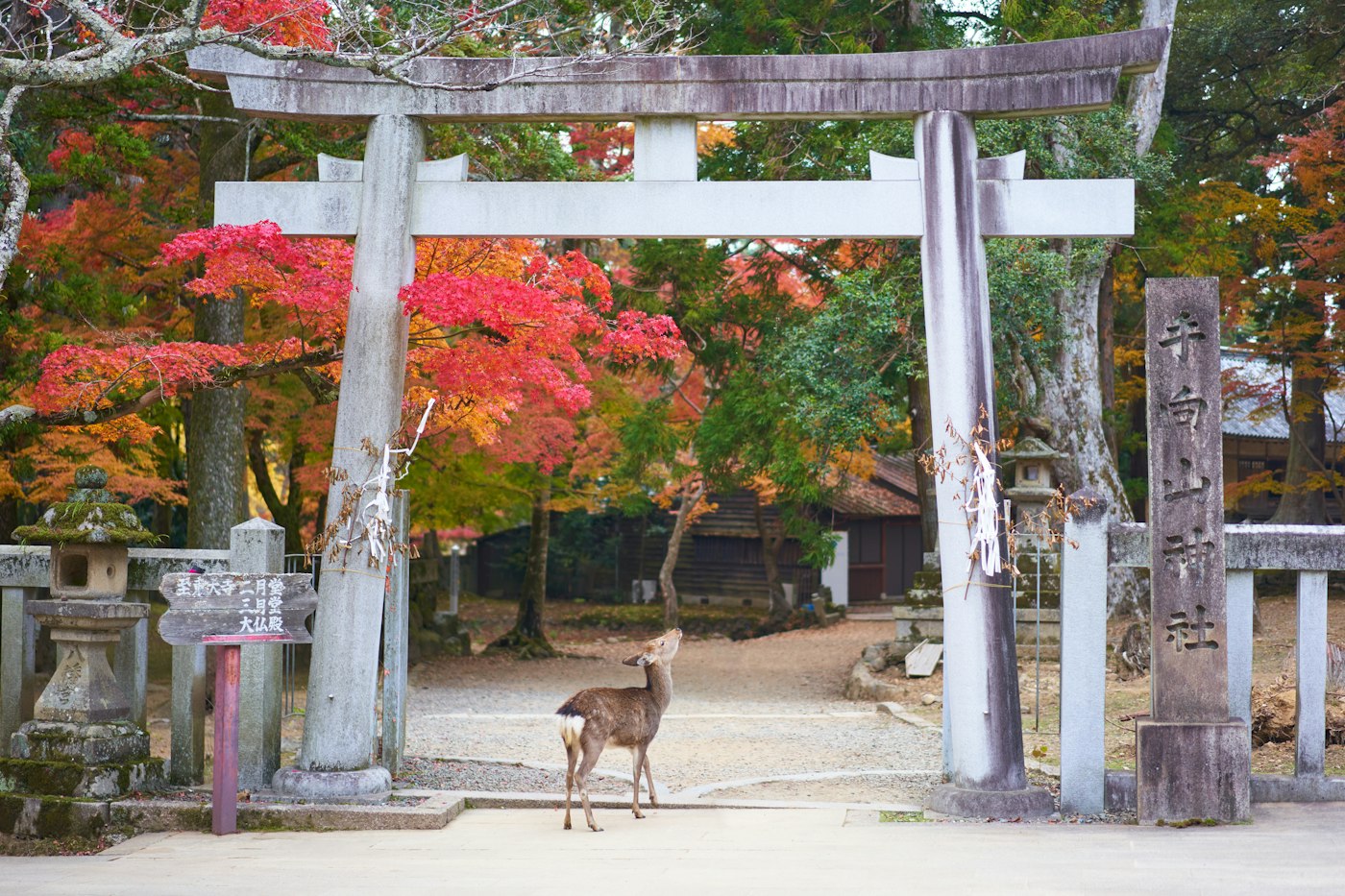
Before Kyoto, there was Nara — Japan's first permanent capital, where in the eighth century the country assembled its identity from bronze, silk and scripture. The Great Buddha of Tōdai-ji still sits within one of the largest wooden buildings on earth; the lanterns of Kasuga Taisha, three thousand of them, have been offered by the faithful across twelve centuries. Through it all wander the sacred deer, messengers of the gods, bowing to visitors in the park as they have for generations. Nara is Japan at its source — older, slower, and strangely untroubled by everything that came after. The discerning give it a full day, and regret giving it no more.
From Tokyo, the journey divides gracefully: the Nozomi Shinkansen to Kyoto Station — a little over two hours in the Green Car, chauffeurs at both ends — then the drive south, some fifty minutes along the Keinawa Expressway through the hills of Yamashiro. Guests based in Osaka are nearer still, forty-five minutes by the Hanshin and Nishi-Meihan Expressways. The Lexus LM suits the day perfectly, its rear cabin a place of rest between temples; your chauffeur carries deer crackers and the patience the park requires. Doors open in silence near the great Nandaimon gate; the car waits precisely where the afternoon ends. White gloves, soft voices, an unhurried itinerary.
The Nara Hotel, built in 1909 in imperial timber style, has hosted emperors, Einstein and Audrey Hepburn; its high-ceilinged rooms remain the city's most storied address. Enter Tōdai-ji's Daibutsuden at opening, when the Great Buddha emerges from the morning dark to an audience of almost no one. Walk the lantern paths of Kasuga Taisha toward noon — or time the visit for early February or mid-August, when all three thousand are lit for Mantōrō and the forest fills with candlelight. At dusk the deer drift home across the lawns. Dinner in Kyoto or Osaka is an hour away; most guests find themselves wishing it were further.
Nara — Gallery